Counterfeit collectible coins continue to rise in quality and scale. It, of course, creates uncertainty in a hobby built on trust, rarity, and verifiable history. Modern collectors now face fakes that mimic genuine strikes with sophisticated alloys and near-perfect surface details. How to protect yourself, your assets, and your favorite hobby?
Authentication requires a layered strategy that blends traditional expertise with advanced technologies in a coin identifier app. Let’s understand modern methods ranging from hobbyist to professional levels.

Traditional Expertise and Grading Services
Long before digital tools existed, numismatists relied on trained visual analysis. Expert examination remains the frontline defense against counterfeits because specialists recognize patterns and inconsistencies that are difficult for forgers to imitate. Under magnification, a professional studies strike quality, font consistency, edge sharpness, and die characteristics. These subtle markers often distinguish genuine mint output from imitations.
Foundational checks still matter:
- weigh the coin using a precise scale
- verify diameter and thickness using calipers
- examine edges for uniform reeding
- look for mismatches in relief depth
- compare to known certified examples
Grading companies such as PCGS and NGC formalize this process. Coins submitted for review undergo authentication, grading, and encapsulation in tamper-evident slabs. Each slab carries a unique serial number linked to a database so collectors can confirm provenance and population data. This combination of expert inspection and structured documentation stabilizes market confidence.
Traditional expertise has limitations, especially when counterfeits use advanced casting or laser engraving, but it remains a critical first layer. Knowing how a coin should look and feel sets the baseline for all later verification.
Advanced Tech: AI, UV, and Spectroscopy
As counterfeiters adopt more sophisticated techniques, collectors increasingly rely on modern technology to detect flaws invisible to the naked eye. These tools complement traditional expertise by analyzing composition, surface texture, and engraving precision with scientific accuracy.
AI-driven analysis has become one of the fastest-growing methods in numismatic authentication. Artificial intelligence compares a coin’s photo against thousands of verified reference images, scanning for:
- engraving depth differences
- irregularities in letterform shape
- mismatched relief or contour lines
- incorrect spacing or alignment
- surface patterns inconsistent with mint striking
These automated checks catch micro-level discrepancies that even trained experts may miss on first inspection.
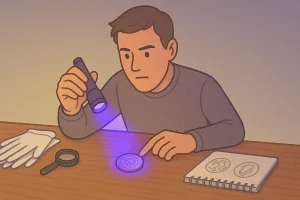
UV (ultraviolet) examination adds another defensive layer. Several modern mints incorporate security markers only visible under UV light. When inspected correctly, genuine pieces reveal:
- fluorescence patterns
- hidden mint symbols
- authenticity markers embedded in the metal or finish
Counterfeits rarely replicate these elements accurately due to specialized minting processes.
Spectroscopy—especially XRF (X-ray fluorescence)—offers precise metal composition analysis. It verifies the elemental makeup of a coin without harming it, making it valuable for determining:
- purity of gold or silver
- correct alloy percentages in copper or nickel pieces
- signs of substituted or plated metals
If the composition does not match official mint specifications, the coin is immediately flagged as suspect.
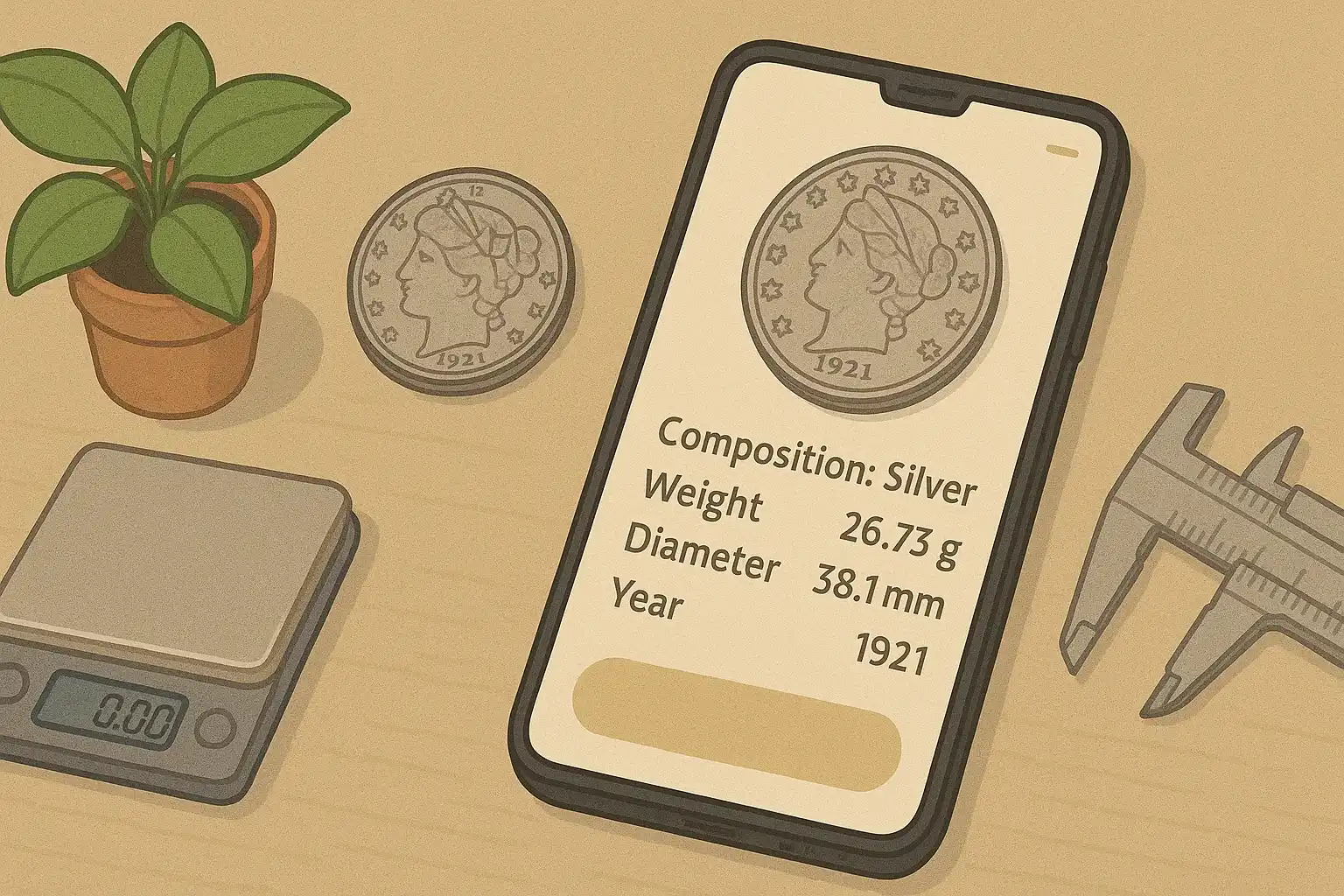
Mobile tools now make much of this analysis more accessible. Coin ID Scanner for iPhone strengthens digital verification by providing:
- photo-based identification
- official mint specs (composition, weight, diameter, edge type)
- minting years and country data
- pricing references
- access to a database of more than 187,000 coins
These details allow collectors to cross-check physical tests with accurate digital records. Smart filters in the premium freemium tier streamline manual searches, while AI-assisted analysis helps confirm authenticity on the spot.
Used together, AI analysis, UV inspection, and spectroscopy create a multi-layered shield against increasingly sophisticated fakes. Each method targets different weaknesses in counterfeit manufacturing, making modern verification more reliable than ever.
Practical Implementation Steps
Combating counterfeits becomes far easier when collectors adopt consistent verification habits. The goal is to blend expert review, modern tools, and routine testing into one repeatable workflow. When combined, these methods drastically reduce risk and strengthen long-term collection integrity.
A practical, scalable approach includes:
- Verify Sellers Before Buying
Reputable dealers typically hold ANA membership or long-established trade reputations. Transparency in pricing, provenance, and return policies signals trustworthiness. Avoid sellers unwilling to provide clear photos, measurements, or transaction documentation. - Prioritize Certified Coins for High-Value Purchases
Slabbed pieces from PCGS, NGC, or ANACS offer strong protection thanks to tamper-evident holders, serial-number verification, and expert authentication. For rare or costly items, certification should be treated as a baseline requirement. - Document Coins at Acquisition
Photograph each new piece and store images alongside measurements, seller information, and grade notes. Digital records help identify changes in condition or inconsistencies later. Blockchain-based apps or provenance platforms can add an extra layer of security through immutable time-stamped entries. - Test Coins Routinely
Before adding a coin to your permanent collection, run it through a short checklist:- weight accuracy
- caliper measurement
- magnet rejection
- UV inspection
- sound test when applicable
These simple steps catch a surprising number of counterfeits without requiring advanced tools.
- Use Digital Tools to Strengthen Verification
Apps like Android Coin Value Checker offer fast confirmation of minting years, composition, diameter, weight, and price through photo identification. The AI Coin Helper and smart filters in its premium tier help spot inconsistencies, especially when evaluating foreign or unfamiliar types. - Combine Human Expertise With Technology
No single method can stop every counterfeit. Success comes from layering:- expert grading for accuracy,
- AI tools for speed,
- spectroscopy or UV checks for scientific confirmation,
- blockchain provenance for tamper-proof documentation.
Each part strengthens the others, forming a multi-layered defense system.
When to Use Each Anti-Counterfeit Method
| Method | Best Use Case | Strength |
| Expert Visual Review | First inspection; detail comparison | Detects design flaws and strike issues |
| Weight & Measurement | All coins, especially precious metals | Identifies wrong alloys instantly |
| UV & Spectroscopy | High-value or suspicious pieces | Scientific metal confirmation |
| AI Photo Identification | Everyday verification | Fast comparison against huge databases |
| Slab Certification | Rare or expensive coins | Market-trusted authentication |
| Blockchain Provenance | Long-term record keeping | Tamper-proof ownership chain |
Fighting counterfeit collectible coins demands a blend of traditional skill and modern innovation. Expert scrutiny identifies the subtle markers forgers often miss. Weight tests, calipers, and visual inspection set a strong foundation. Technologies such as AI photo matching, UV validation, and XRF spectroscopy extend accuracy far beyond human perception. Blockchain certification, meanwhile, introduces a fully traceable ownership path built to resist tampering.
For everyday collecting, tools like Coin ID Scanner offer fast and reliable identification, helping collectors confirm specs, compare images, and flag inconsistencies before making a purchase. For rare or high-value pieces, pairing digital tools with professional grading creates the strongest defense.
Collectors who adopt a layered approach—expert insight + digital verification + scientific testing + secure provenance—build collections that remain trustworthy, valuable, and future-proof in a world where counterfeit techniques continue to evolve.